.jpg)
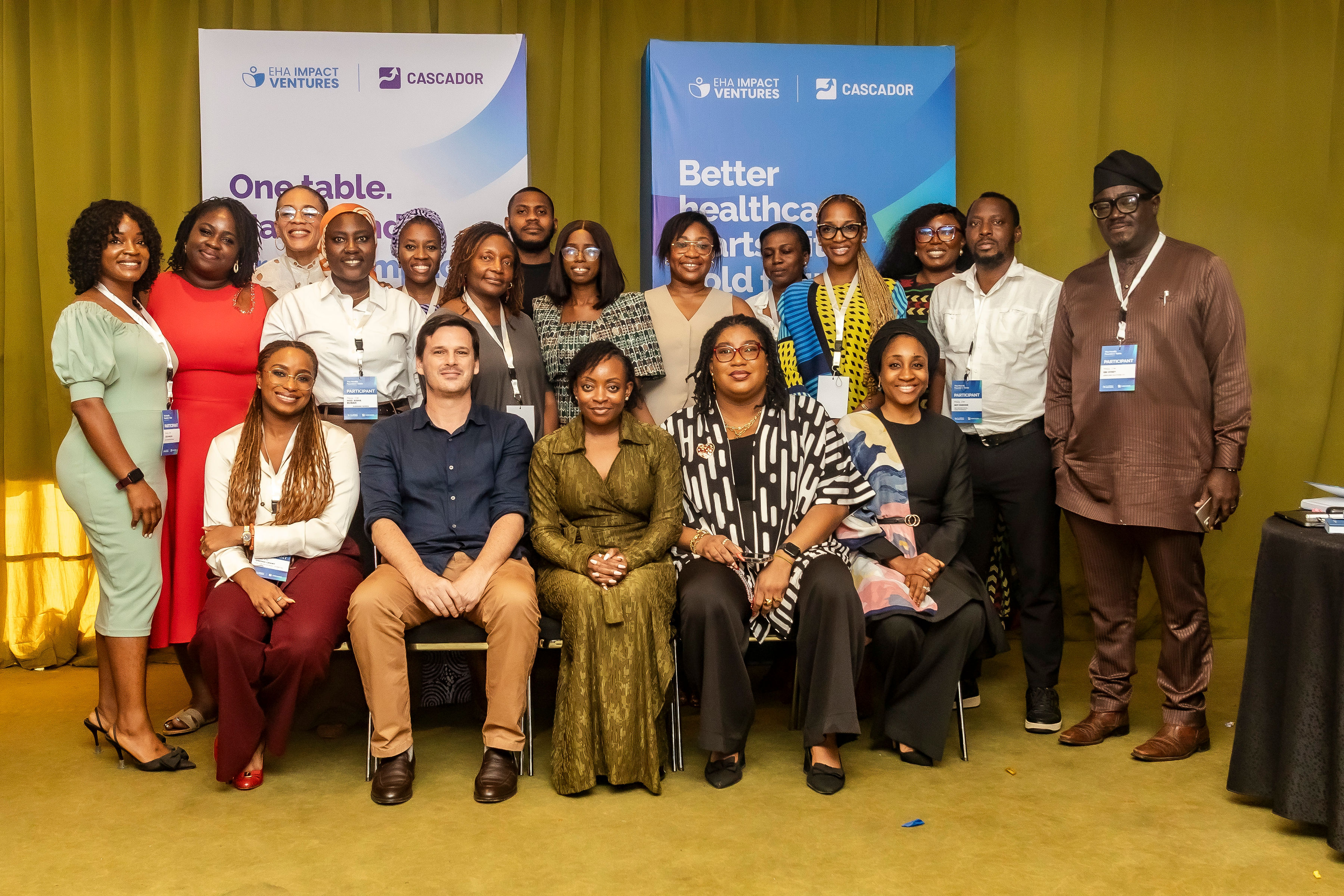
Aisha Bubah has spent years building mental health infrastructure in Nigeria, including the country's first suicide-prevention helpline. In Lagos, Ebunoluwa Collins was doing the same thing at BlueroomCare. Different cities, different organizations, same mission. Until August 4, 2026, they had never sat in the same room.
That changed at the Health Founders' Table, hosted by EHA Impact Ventures and Cascador, and it's a small detail that points to a much bigger problem. Nigeria has fewer than 250 psychiatrists for a population of over 200 million: a ratio of roughly one psychiatrist to every 960,000 people (1:960,000), against a WHO-recommended standard of 1:10,000. In a crisis this size, founders working in parallel, rather than together, is a cost the sector can't really afford.
For years, conversations about entrepreneurship in Africa have centred on a single question: How do founders access capital? It is an important question. But after listening to founders, operators, healthcare leaders, and investors in that room, it became clear that it is no longer the only question that matters.
The reality is that many founders do not fail because they lack ambition, vision, or even funding. They struggle because scaling a business requires a combination of assets that are often discussed separately but experienced together. Capital is one piece of the puzzle. Trust is another. Talent is another. Market access is another. And increasingly, founders need all of them at the same time.
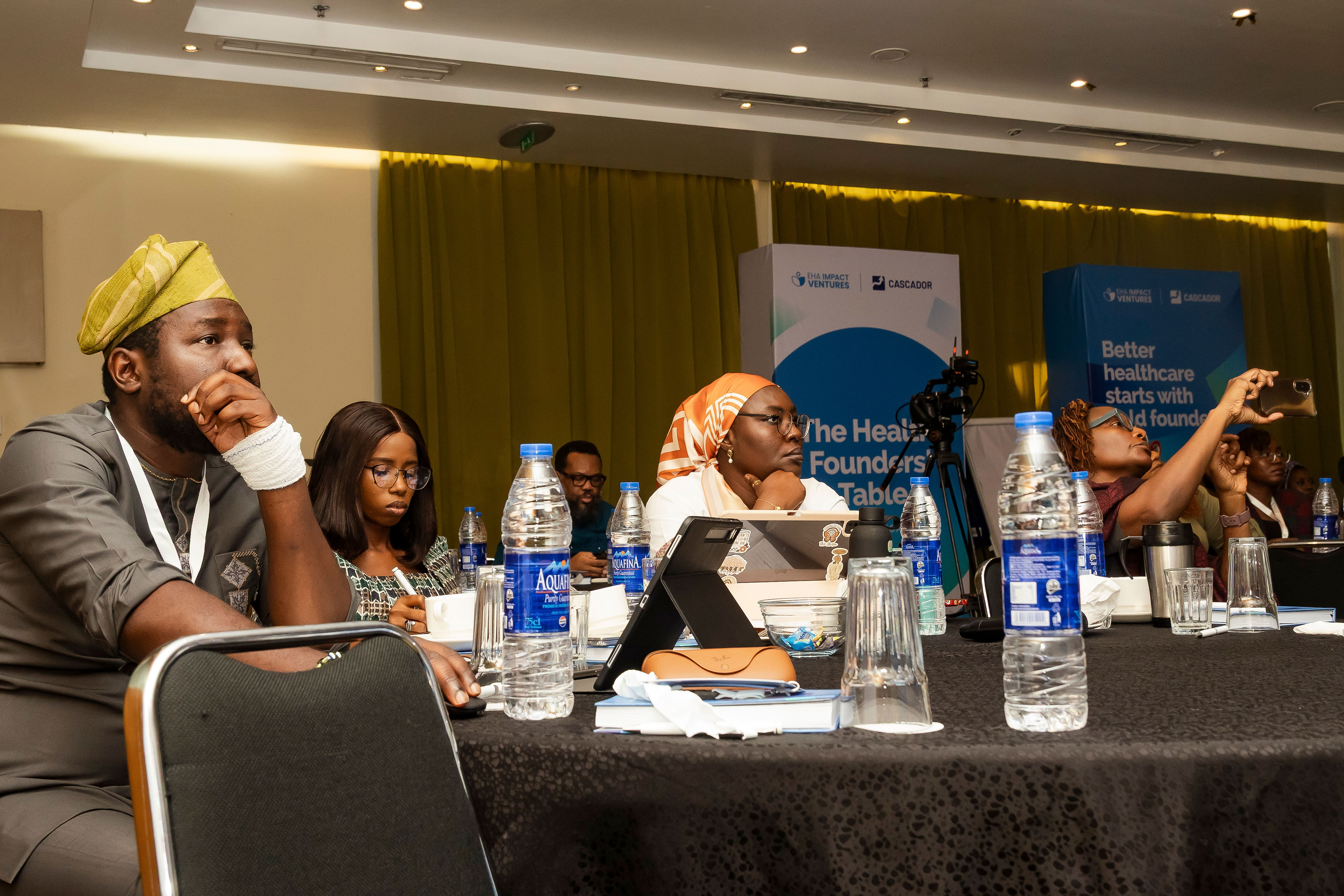
Ask a founder at the table what fundraising felt like this year, and the answer wasn't about rejection, it was about crowding. Nigerian startups raised $78.6 million across 15 disclosed deals in Q1 2026, a 28% year-on-year decline, and the top 10 funded startups alone accounted for nearly 99% of that total, according to Nairametrics. The room's problem wasn't that investors prefer proven markets, it's that funding is becoming marginalised for everyone outside a small circle.
That circle, it turns out, is defined less by merit than by geography of a different kind: proximity to foreign networks. A recent study by researchers at CEPR, the World Bank's IFC, and several universities found that roughly 80% of African VC deals involve at least one foreign investor, and roughly two-thirds of funded founders have foreign education or work experience. A founder whose investor's country matches their own country of education is roughly four times more likely to receive funding from that country , a match worth, on average, an additional $1.1 million or so.
The data is telling on this point: foreign connection buys access. It does not buy performance, little evidence exists that those founders perform better once funded; the advantage largely vanishes once you control for first-deal characteristics.
A founder without that network, in other words, is not a worse operator. They are a worse fit for one particular distribution channel.
So the Founder’s Table turned to the doors that don't require a foreign passport stamp to open. Founders worked through five funding pathways gaining ground as real tools, not fallback options:
Capital readiness, the room agreed, isn't just about pitching investors. It's about building a business that can attract and deploy several of these forms of capital at once.
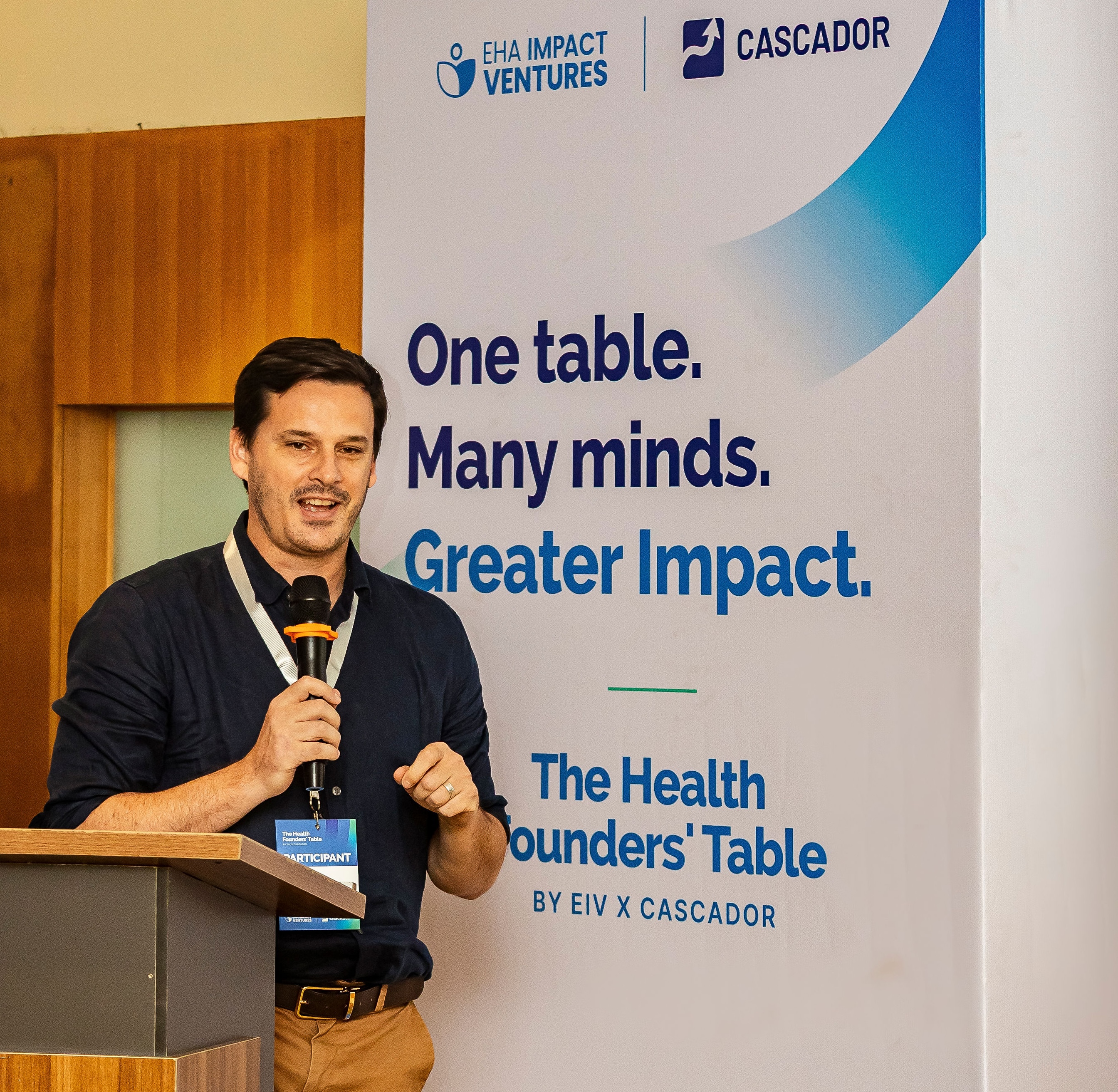
Unoma Grant, Chief Operating Officer of Paelon Memorial Hospital and a facilitator at the event put it simply: a hospital doesn't adopt your product because it's good. It adopts your product because someone trusts you with a decision that affects a patient's life.
That distinction shaped one of the day's most compelling discussions. Many founders assume a strong product naturally leads to adoption , but in healthcare, that assumption rarely holds. Hospitals, providers, regulators, and institutional buyers are making decisions with real consequences, so trust becomes a prerequisite for growth, not a byproduct of it. It's built through evidence, reliability, operational readiness, and a clear understanding of what each stakeholder actually needs , earned over time, reinforced in every interaction.
For founders, this reframes market access entirely: it isn't a sales challenge. It's a trust-building exercise. One concrete tool came up again and again, the impact report. Done well, it gives every stakeholder visibility into a company's actual outcomes, functioning as both accountability to funders and a kind of social licence to operate. Yewande Ososanya of Strateco Sustainability walked founders through what a strong version of it includes: a clear impact thesis, performance measured against that thesis, and honest learnings from the year , so investors walk away with evidence, not just a pitch.
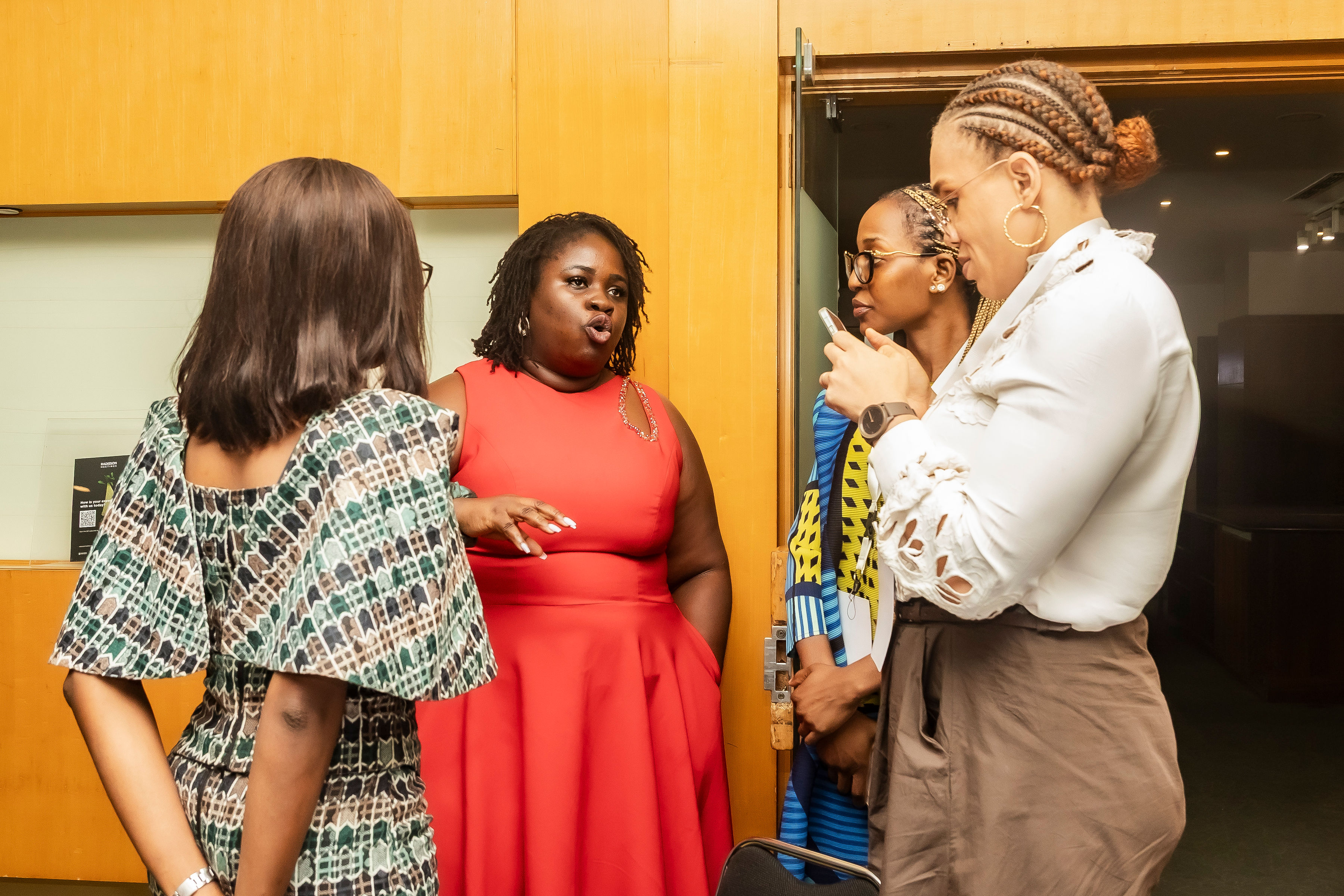
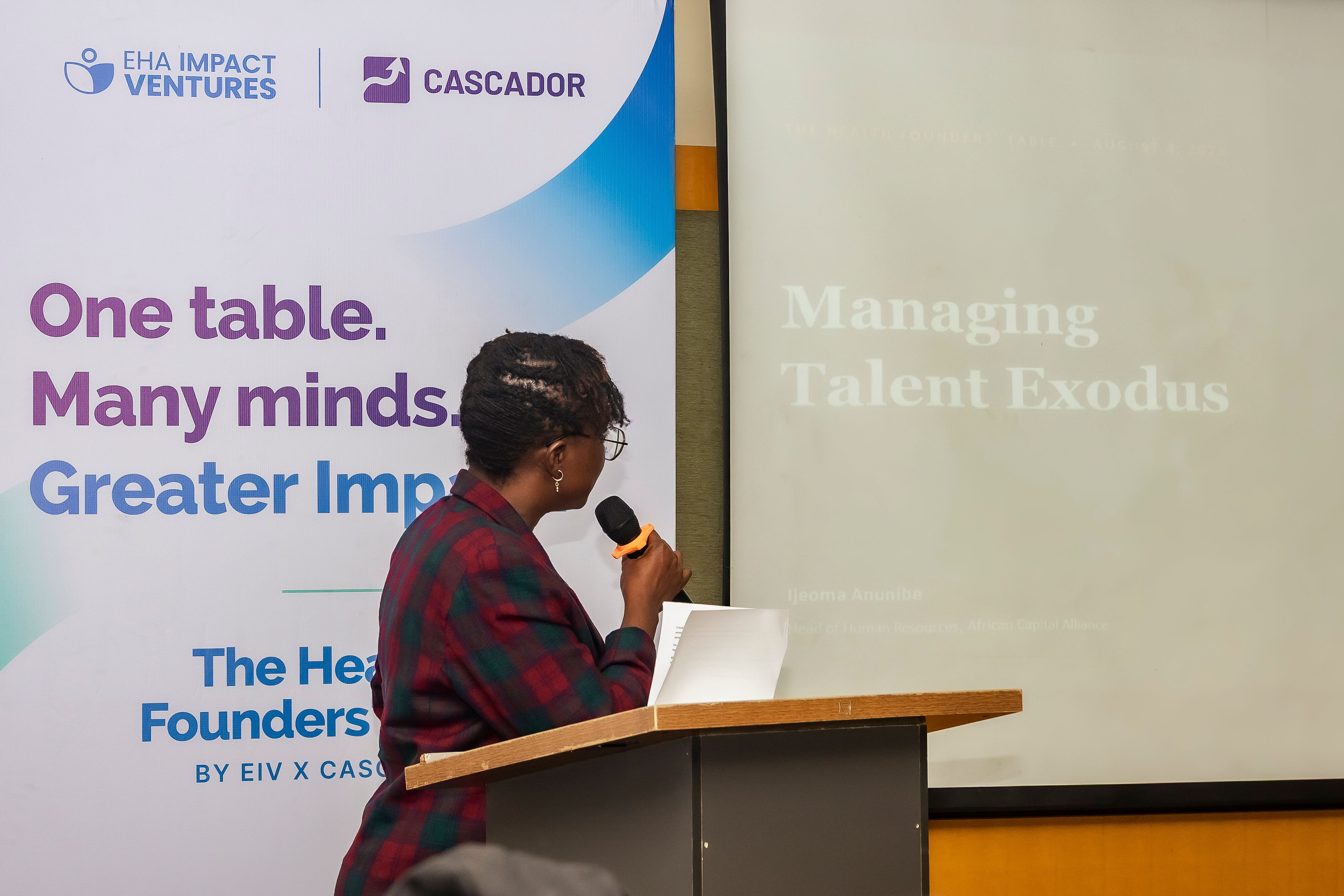
One founder described losing her best clinical lead to a hospital abroad, not because the job here was bad, but because the job there paid four times as much. She isn't alone. Nigeria has at least one doctor for every 3,600–4,000 people, far below the WHO-recommended ratio of one doctor per 600 (1:600), and every founder in the room had a version of the same story.
Too often, workforce migration gets treated as a national policy issue rather than a founder challenge. But for a health business, growth stalls fast when critical knowledge leaves faster than it can be transferred. The question the table kept returning to wasn't whether talent would move , it's how organizations build resilience around the fact that it will. Five approaches came out of that conversation:
The most resilient organizations in the room weren't the ones that had prevented every departure. They were the ones that had planned for it.
By the end of the day, Aisha and Ebunoluwa weren't just two founders who'd finally met. They were proof of the piece's real argument: founders rarely face these challenges alone, they just don't always know who else is facing them too.
Capital, trust, market access, and talent are deeply interconnected problems, and solving them requires collaboration between founders, investors, operators, regulators, healthcare providers, and ecosystem builders. That's why spaces for honest dialogue matter, not because they hand out immediate answers, but because they surface shared challenges, strengthen relationships, and open pathways to solve problems collectively.
As Africa's health sector evolves, the conversation has to move beyond funding alone. Supporting founders means helping them access the full range of resources they need to grow sustainably. Because the businesses that will shape the future of healthcare aren't built on capital alone. They're built on trust, resilience, partnerships, and the ability to navigate complexity over the long term.
Learn more about the Health Founder’s Table here