A 2025–2026 analysis by Lyra Southern Africa found that women account for nearly two-thirds of employee mental-health program usage, and that female executives report burnout at meaningfully higher rates than their male counterparts, citing a 43% compared to 31%. Deloitte's earlier "Women @ Work" research found a similar pattern: 40% of South African women reported feeling burnt out, and a striking 94% believed that even requesting flexible work would hurt their chances of promotion. The system isn't just tiring women out, it's teaching them that asking for support is a career risk.
What Building a Workplace Women Choose Actually Looks Like
It isn't about adding perks. It's about redesigning the defaults so a woman doesn't have to choose between showing up fully at work and showing up fully at home. In practice, that can look like:
None of this is radical. It's just rarely designed on purpose.
Even where flexible work exists, it often comes with a silent tax. Deloitte's research found that almost 60% of women working hybrid schedules felt excluded from important meetings, the flexibility was offered, but the visibility and advancement that come with being in the room were not. Policy on paper isn't the same as a culture that actually absorbs it.
Organizations that build around real life, rather than around the assumption that someone else is managing it, see the return in retention and leadership pipelines. This is the reasoning behind EIV's gender diagnostics toolkit, a way for portfolio companies to see, concretely, where their policies and practices fall short for their female staff, instead of guessing.
To be direct about where we are: the toolkit has so far been deployed to two of our portfolio companies, and both are still at the improvement-plan stage — we don't yet have implementation results to point to. That's part of why we're convening this conversation rather than just publishing a framework. We want to build this alongside founders and HR leaders who are further along, not hand down conclusions we haven't earned yet.
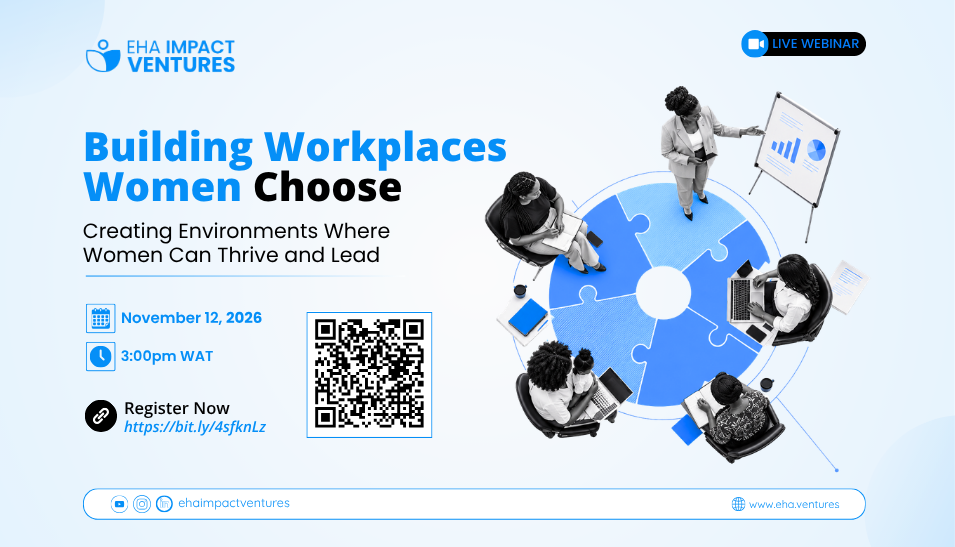
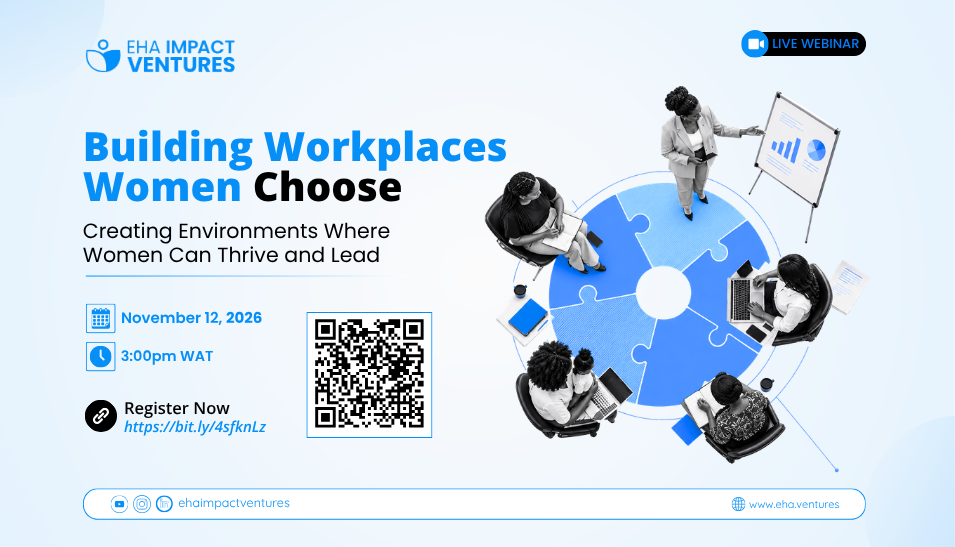
We're bringing together founders, HR leaders, and investors to talk through what it actually takes to build a workplace women choose to stay in, grounded in real diagnostics, not aspiration. If you have a story or case study of your own, we'd love to hear it during the session.